
Fix and flip loans are short-term, business-purpose loans used to acquire, renovate, and resell investment properties. A lender may finance part of the purchase price and some or all of the approved rehab budget, with rehab funds released through draws as work is completed. Blue Dot Financial structures fix-and-flip loans for investors who need fast closing, renovation capital, clear draw management, and an exit plan based on resale or refinance.
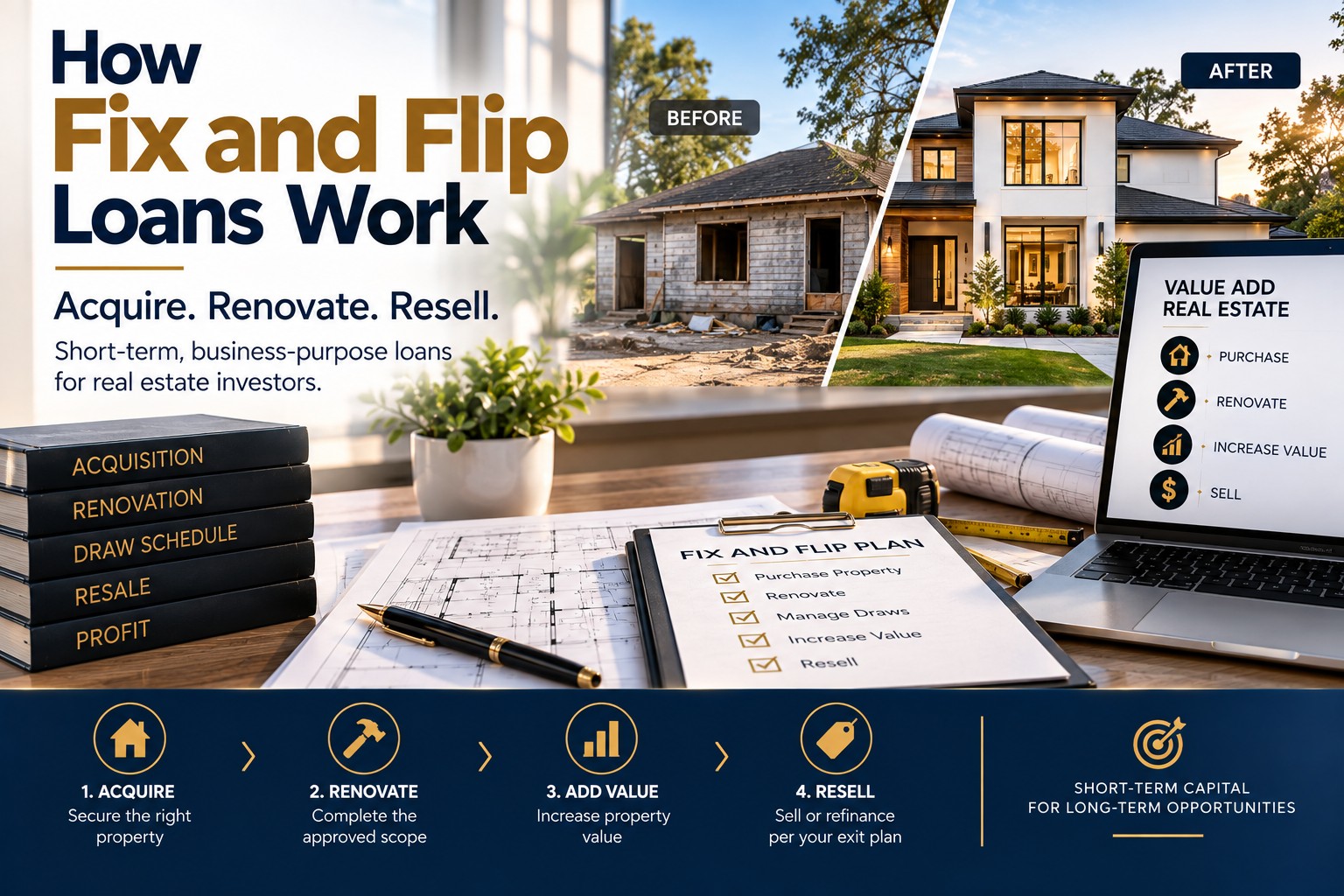
How Fix and Flip Loans Work matters because renovation deals depend on speed, budget control, and a realistic resale plan. A strong lending structure helps investors acquire the asset, complete work, and move toward the planned exit without waiting on traditional financing that may not fit the project. Understanding private real estate lending can also help investors understand the broader financing approach for investment properties.
This page is written for fix-and-flip investors and renovation-focused real estate operators. It is especially useful for borrowers who want to understand whether fix and flip loans can support a non-owner-occupied investment property strategy. Borrowers can also review fix and flip loan requirements to understand the information commonly needed for a loan review.
Blue Dot Financial provides private real estate lending for investment projects where speed, collateral clarity, borrower readiness, and exit strategy matter. For fix and flip loans, the review should focus on the asset, the borrower entity, the business-purpose use, the project economics, and the repayment plan. Blue Dot’s underwriting approach is also discussed in how private lenders underwrite real estate deals.
Flip timelines move quickly. Investors may need to secure a property, close before another buyer, begin renovation, and manage resale timing. Private lending helps align acquisition funding, renovation draws, and short-term repayment with the realities of a value-add project. For borrowers evaluating other short-term financing structures, bridge loans for real estate investors may also be relevant depending on the transaction.
Blue Dot evaluates the purchase price, current property condition, proposed scope of work, budget, contractor readiness, borrower experience, projected ARV, marketability, and resale timeline. A strong flip loan request is specific, documented, and backed by a realistic exit. Investors focused on after-repair value can also review ARV loans for real estate investors.
The key factors are ARV, LTC, rehab budget, reserves, borrower experience, title status, insurance, and the local resale market. The cleaner the scope and timeline, the easier it is to evaluate the loan structure. Investors should also understand how rehab draws work when renovation financing is part of the loan structure.
A borrower improves the review process by submitting a signed contract, itemized rehab budget, contractor bids, comparable sales, entity documents, and proof of liquidity early. Reviewing the fix and flip loan document checklist can help borrowers organize the project information needed for the financing review.
| Consideration | Why It Matters |
|---|---|
| Collateral | The property or portfolio must support the requested loan amount and exit strategy. |
| Borrower entity | Blue Dot’s borrower-side loans are designed for business-purpose entities, not owner-occupied consumer mortgages. |
| Timeline | Fast closings require complete documentation, clean title coordination, and responsive borrower communication. |
| Exit strategy | Sale, refinance, payoff, or stabilization must be realistic and clearly documented. |
| Reserves | Liquidity helps protect the project from budget overruns, delays, and carrying-cost pressure. |